

Introduction to Foreign Information Manipulation and Interference (FIMI)
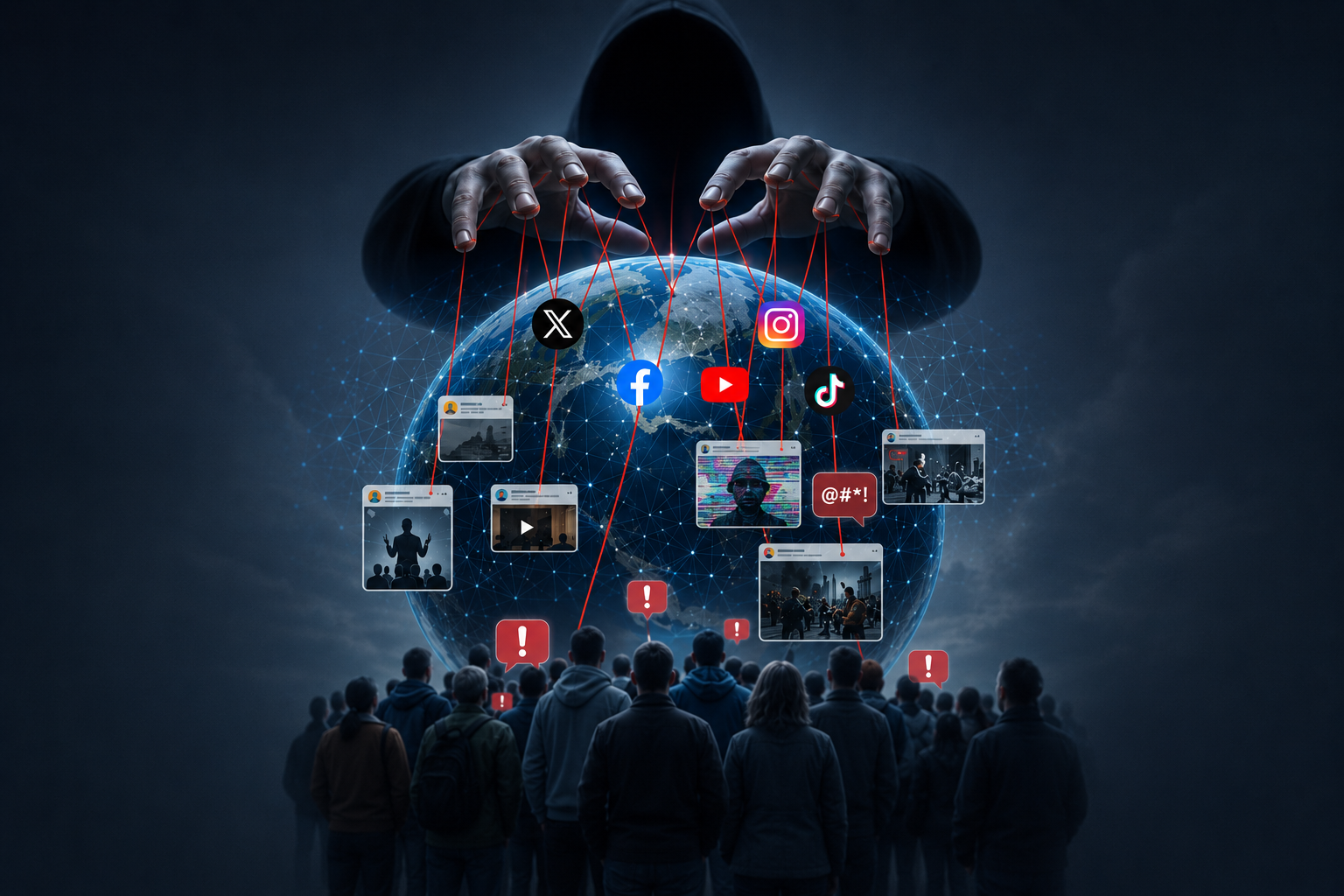
Foreign Information Manipulation and Interference (FIMI) refers to coordinated efforts by foreign actors, usually states, state-linked organisations, or individuals, to influence public opinion, political decisions, social stability, or democratic processes in another country through deceptive or manipulative information activities. In simple terms, it involves organised attempts by a foreign state to influence people online through propaganda, misleading narratives, emotional messaging, and coordinated social media activity.
FIMI combines elements of:
Disinformation – false or misleading information spread intentionally
Misinformation – inaccurate information spread without harmful intent
Propaganda – biased messaging designed to shape perceptions
Cyber-enabled influence operations – use of digital platforms, bots, and social media manipulation.
Global FIMI Landscape
Globally, Foreign Information Manipulation and Interference (FIMI) operations are driven by a range of strategic, political, and geopolitical motives and have been identified across more than 100 countries. According to an analysis conducted by the European External Action Service covering the period from 1 January to 31 December 2025, Russia remained the most significant state actor in the FIMI landscape, accounting for 29% of identified incidents, while 6% were linked to China, and the remaining 65% were unattributed, reflecting the complexity of attribution in modern information environments.
Tools and Tactics of Modern FIMI
Contemporary Foreign Information Manipulation and Interference (FIMI) campaigns operate as coordinated ecosystems that combine traditional propaganda methods with advanced digital technologies. Rather than relying on a single channel, threat actors use multiple layers of infrastructure to shape perceptions, amplify narratives, and obscure attribution.
1. AI-generated content
A rapidly growing component of FIMI is the use of artificial intelligence to generate synthetic media, including deepfake videos of public figures, AI-generated images and audio clips, fabricated news articles or “expert commentary”, and multilingual propaganda content.
2. Official state channels
State actors often use government ministries, embassies, and official spokesperson accounts to seed narratives that appear legitimate and authoritative. These channels are used to frame events, justify policies, or respond rapidly to crises, giving state messaging an aura of credibility.
3. State-controlled media networks
FIMI campaigns frequently rely on state-funded or state-aligned media outlets that publish content in multiple languages and regions. These outlets can:
reinforce government narratives globally
reframe international events from a specific geopolitical perspective
repeat and amplify messages introduced elsewhere in the information ecosystem
This creates a “multiplier effect” where the same narrative appears across many seemingly trustworthy sources.
4. Proxy websites and “independent” outlets
A key tactic is the use of proxy media ecosystems: websites, blogs, and online news pages that appear independent but are covertly influenced or coordinated. These may:
mimic legitimate journalism styles
recycle content from official or state-linked sources
obscure ownership or funding structures
Such proxies help blur the line between authentic and manipulated information.
5. Social media manipulation at scale
Modern FIMI heavily depends on social platforms through:
fake or automated accounts (bots)
coordinated “troll” networks
hashtag amplification campaigns
engagement manipulation (likes, shares, comments)
These tools significantly increase the speed, scale, and apparent authenticity of influence operations, making manipulation harder to detect and verify.
Case Study of FIMI in Sri Lanka on Pro-Russian Information Operations
Data was collected from Facebook, and the study identified six Facebook channels exhibiting characteristics of FIMI in pro-Russian information operations. Further analysis was conducted on these selected Facebook channels to examine their information dissemination behaviour. Across these pages, between January 2022 and March 2026, approximately 4,484 pieces of content (posts, videos, etc.) were shared, generating 372,416 reactions, 18,461 comments, 18,975 shares, and more than 6 million video views.
Findings of the study:
Across all six pages, a consistent narrative pattern was observed:
Persistent pro-Russian framing of the Russia-Ukraine conflict
Recurrent anti-Ukraine and anti-Western messaging
Frequent portrayal of Russia as militarily dominant or “winning”
Heavy reliance on Russian state-affiliated or aligned media sources
Following the onset of the US-Israel vs Iran conflict, these pages also began publishing content in support of Iran
A significant proportion of content focused on military developments, battlefield imagery, and war commentary. This content often emphasised interpretive framing rather than neutral reporting, reinforcing a consistent ideological perspective.
Despite the politically oriented content, the pages were categorised under neutral or non-political classifications such as News and Current Affairs, Digital Creator, Personal Blog, and Journalist.
The administrators of these accounts appear to involve cross-border management beyond Sri Lanka. It is observed that administrators may be operating not only from Sri Lanka but also from other countries such as Russia and Japan.
Several pages may have originally been created for unrelated purposes, including commercial or general content publishing. Over time, these pages appear to have undergone name changes, shifts in thematic focus, and a transition towards politically charged content distribution.
Visible coordinated activity was observed through the resharing of posts among channels within the network.
This study identifies sustained pro-Russian and anti-Western narrative dissemination across six Facebook pages operating within or relevant to Sri Lanka’s information environment between 2022 and 2026. The combination of thematic consistency, engagement patterns, content sourcing, and structural indicators suggests the possible presence of coordinated information influence activity. While definitive attribution cannot be established from open-source data alone, the observed behaviours align with documented characteristics of FIMI operations.
Conclusion
Sri Lankans are among those reported to have one of the highest numbers of foreign fatalities while fighting for Russia in the Ukraine war. What happens online no longer remains online. A Facebook post or propaganda video can eventually lead someone from Sri Lanka to a battlefield in Ukraine. This reflects the true power and danger of modern information warfare, where consistent language patterns, narratives, and emotionally charged content can shape perceptions and influence real-world actions.
Therefore, Sri Lanka urgently needs stronger media literacy education, fact-checking systems, and digital awareness campaigns to counter FIMI and disinformation. In addition, social media platforms must take appropriate action to identify and counter FIMI operations.
Article by Shanuka Perera
References:
https://euvsdisinfo.eu/foreign-information-manipulation-and-interference-fimi-explained
https://www.consilium.europa.eu/en/policies/disinformation-and-democratic-resilience/
https://www.himalmag.com/politics/russia-ukraine-war-casualties-southasia-srilanka


